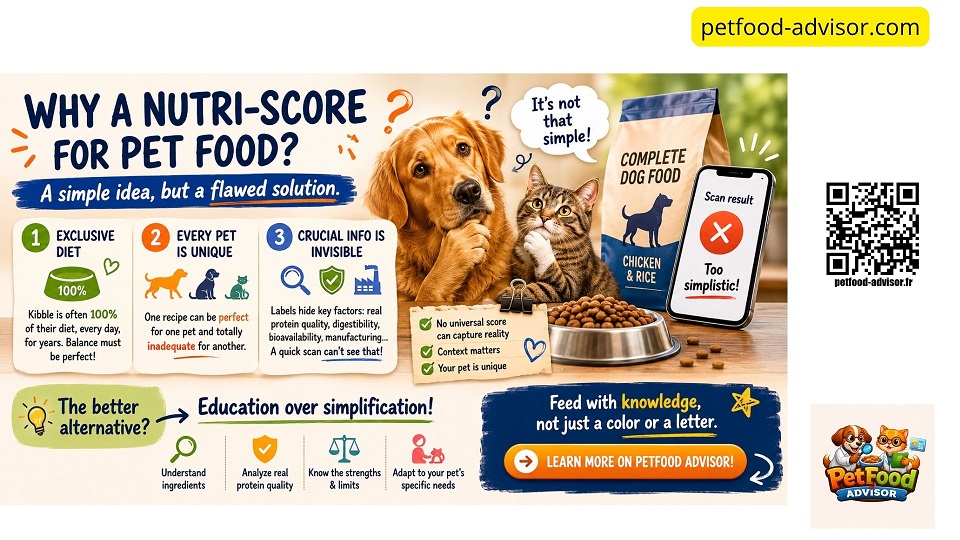
As pet owners, we often wish we could just scan a bag of kibble with an app like Yuka or rely on a Nutri-Score to instantly know if it is healthy. While this idea is very attractive and reassuring, applying a simple A-to-E grading system to pet food is actually a fundamentally flawed idea.
Here is why a universal score simply doesn’t work for our furry companions:
1. The Danger of an Exclusive Diet
Applications like Yuka work well for humans because our diet is highly varied; a poorly rated snack can easily be balanced by a healthy dinner. However, kibble often constitutes 100% of a dog’s or cat’s diet every single day for several years. Because of this exclusive feeding, the nutritional balance must be strictly perfect, making a simple letter grade totally insufficient.
2. Every Pet is Unique
A universal score attempts to condense a complex reality into a single number, which can be dangerously misleading. A specific recipe might be excellent for a highly active dog but completely inappropriate for a sterilized, sedentary, or senior pet. A global score could easily penalize a food that perfectly matches a specific animal’s needs, or falsely validate an unbalanced product.

3. Crucial Information is Invisible on Labels
Automatic scoring relies exclusively on label data, but labels hide fundamental information. A quick scan cannot evaluate the real origin and quality of the proteins, ingredient digestibility, nutrient bioavailability, or the industrial manufacturing processes used. Two bags of kibble with similar printed compositions can yield completely different health results in practice. An algorithm mixing all these factors forces invisible compromises, making the final score fundamentally approximate.
The Better Alternative: Education over Simplification Instead of relying on a scoring app that offers an illusion of mastery, it is better to seek out detailed and contextualized information. Platforms like Petfood Advisor choose to educate rather than oversimplify.
By breaking down the ingredients, analyzing the real quality of proteins, and highlighting both the strengths and limits of each recipe, you can make an informed choice tailored to your pet’s specific physiological needs. After all, properly feeding your companion requires true understanding, not just a simple color or letter.